Tuesday, 13 April 2010

purposeful tool for the new diplomacy


Diplomacy is a practice that underwent several changes over time and is still evolving, accommodating the changing global environment. Currently two main issues are affecting diplomacy as a result of its increased openness, inclusiveness and its engagement with low politics matters: the emergence of non-state actors in the diplomatic communication and the increasing relevance of multilateral diplomacy.

Nowadays non-state actors, such as NGOs, are acquiring more relevance in the international scenario, either because states are sometimes unable to deal with some issues, e.g. failed states, or because some issues are becoming increasingly internationalized, e.g. human rights, environmental problems etc. For the same reasons non-state actors are engaging more with diplomatic actions, as Richard Longhorne states “when crisis seem to lie beyond the control of governments or the relevant intergovernmental organizations, non-state actors come to play significant roles”(Longhorne, 2005, 332) and they are able to “transcend the constrains of the state” (ibid.).
One example which shows the importance of NGOs diplomacy is Greenpeace winning the diplomatic war over whales fishing in Japan in 2006.
http://weblog.greenpeace.org/oceandefenders/archive/2006/06/wake_up_and_smell_the_cof.html.

The other important aspect of the new diplomacy is its multilateralism which is a diplomatic communication undertaken by several governments simultaneously (Walker, 2004, 16).
As said above, many global issues are crossing the states’ borders, and a pooled diplomacy can be an useful to gain mutual benefits and tackle cross border issues such as pollution or poverty.
The Non-Aligned Movement is a good example of multilateral diplomacy, and though during its existence faced problems related to the hegemonic and hierarchical structure of the international system (not only, but also internal problems due to lack of consent and consistency), it highlights an important development: it allowed weak states to have a diplomatic machinery which otherwise would have been completely absent. Moreover multilateral diplomacy allow weak states to have a seat together with the powerful ones and could permit the former to be treated equally and fairly; as Walker says “ the weak need the powerful more than vice-versa” (Walker, 2004, 25), but the powerful should leave more room for the weak for the multilateral diplomacy to work properly and fairly.
Overall diplomacy is evolving and implementing its tactics, though it is not abandoning the old practice such as bilateral diplomacy or secrecy.
However this is just the base, in fact both NGOs diplomacy and multilateral diplomacy must be improved to meet relevant goals.
Most of all, NGOs must affirm their legitimacy and multilateral conferences must not be driven by plutocracy.
Both of them are purposeful tool for diplomacy, however they need the spur to develop and improve.


Longhorne R, 2005, “The Diplomacy of Non-State Actors”, in Diplomacy and Statecraft, Vol.16, No.2, Routledge Taylor & Francis.

Walker R, 2004, “Multilateral Conferences: Purposeful International Negotiation”, Palgrave Macmillan, Hampshire.

Saturday, 27 March 2010

Obamas First 100 days

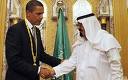
We have witnessed the current approaches used by the US since President Obama went into power. The current approaches to building support for the US policies and American values, has seen it trying to use public diplomacy. The US government under Barack Obama is taking a series of immediate steps to regain American credibility overseas. The Obama administration has revised some of its signature policies and moderate its style of international discourse in order to regain the goodwill the United States previously earned. United States ability to achieve its foreign policy objectives, lies in the use of public diplomacy. The most crucial time as the world was waiting was the first 100 days of Obama in the white house.


Obama ordered the closure of Guantanamo Bay prison camp as well as all overseas CIA detention cetres for terror suspects. signing the order Mr Obama said the US would continue to fight terror, but mantain 'our values and ideas'. He also ordered a review of military trials for terror suspects and a ban on harsh interogation methods. This move has been seen as a further distancing of his new administration from the policies of his predecessor, George W Bush.

http://news.bbc.co.uk/2/hi/7954211.stm

http://news.bbc.co.uk/1/hi/8004798.stm

http://news.bbc.co.uk/2/hi/7845585.stm

US public diplomacy towards Sudan


Diplomacy is a changing phenomenon; its evolution is due to the circumstances that occur around it (i.e. the media changed the ‘classical’/ ‘secret’ form of diplomacy into a new and arguably ‘open’ form of diplomacy) – hence the recent Copenhagen conference. The pressures of social and technological change are the key characteristics of public diplomacy. It is, however, a way of informing and influencing foreign policy by using information and communication technology (ICT), which allow the public to participate in a rapidly changing world.
There has been a recent update on the United States’ public diplomacy towards Sudan. The Obama administration’s recent policy review toward Sudan has resulted in a comprehensive approach intended to address the humanitarian and security dimensions of the Darfur crisis. A constant social pressure and media reports in the US triggered this change of policy. Students and staffs of the School of Media and Public Affairs of George Washington University played a big role in this policy reform by using online social networking and petitions to campaign against precedent US policies towards Sudan. http://www.gwu.edu/~ipdgc/events/uspdsudan.cfm
I found a really good documentary about the 50th anniversary retrospective of the ‘Kitchen Debate’ that spontaneously broke out between Nixon and Krushchev and the 1959 American exhibition in the USSR during the Cold war, which could be seen as public diplomacy.
Although, according to Hans N. Tuch:
public diplomacy has been around for a long time, it may not always has been accepted as an intellectual concept, as an academic discipline, or as a profession in which qualifies foreign service officers engage. But as government have come to realise that foreign relations can no longer be managed by traditional diplomatic practices alone, public diplomacy has become an imperative of a nation’s international life.” (Tuch, 1993:3)
Therefore, from past and recent experiences, one could argue that public diplomacy is still very important in international politics.

Inroads into the Islamic world: Obamas Cairo speech (June 2009)


There have been tensions between the U.S and the Middle East and with the advent of the 9/11 bombings and the building tensions in Israeli – Palestinian relations are serving to further compound the problems, which have transcended from regional into global issues .


Berridge is of the idea that public diplomacy does not exist and that it is mere propaganda. The realist school of thought according to Riordan(2003) also asserts that “ Messages , in so far as they exist, are simply exercises in propaganda, designed to demonstrate the superiority of a given nations position .”(Riordan: 2003:121) However, linking this to Obama’s speech addressed to Cairo University, that simply does not hold water. In this speech he addresses not only Egyptians but the Middle-eastern world in general, drawing upon the significant input of the middle eastern region into modern civilization , the peaceful message of Islam and how these commonalities with Americas egalitarian principles should forge peace and not the descent into war .


Propaganda is the dispersion of a view that is biased in the midst of various voices stating the opposite, whereas this speech is in line with the truth as he engages in a dialogue with that part of the world. He also acknowledges the role of the West in destabilizing the middle east through colonialism and the cold war and talks of partnership, bridging the gap between the two cultures and aligning American policy to pursue peace . From this example we can see how Joseph Nye’s 1997 explanation of soft power as “…convincing others to follow, or getting them to agree to , norms and institutions that produce the desired behaviour ”( Riordan ;2003:120) links in with the use of public diplomacy to engage in dialogue and understanding with foreign publics.


Source

http://news.bbc.co.uk/1/hi/world/americas/8082862.stm speech
http://news.bbc.co.uk/1/hi/world/middle_east/8082730.stm-
The New Diplomacy, Shaun Riordan 2003 Polity Press
The Dynamics of Diplomacy, Jean- Robert Leguey –Feilleux , 2009, Lynne Rienner Publishers

Friday, 26 March 2010

Public Diplomacy

Public Diplomacy


For centuries Governments have in one way or another tried export their nation to other nations. By painting a beautiful picture of their state to other states, they will in a sense have more ‘allies’ in the world. States promote their values, morals,culture, policies and other skills that they feel will better the other nation’s perception of their state. The state does this in order to generate a better understanding and relationship with other states. States can use the tools of public diplomacy in order to secure both short and long term goals.


Public diplomacy goes hand in hand with soft power. States tend to use the tools of soft power when engaging in public diplomacy with other states. With extensive development in communication technology, it is now very easy for a state to engage with others. Some states use other tools such as foreign exchange programs, aid, technological assistant and presidential addresses e.g. President Obamas speech to the Iranian people.


Public diplomacy is a very valuable tool for states in this contemporary world. Weather your states is seen by the international community as a major player or not, states do need to use public diplomacy in order to gain and accomplish some of their national interests goals.


The war on terror gives us a great example of how a state such as the United States conduct their public diplomacy. For the United States to win the hearts of other states especially the islamic world and gain more support against terrorism, they need to make the peoples of other states to understand America. The United States are very keen in exporting themselves as a free democratic state. The have to get people to understand their democratic values: freedom of thought, market and opportunity. The current administration knows that it is really crucial for America to be view as the friends rather than enemies in the islamic world.


China is another power that has in recent years used public diplomacy especially in Africa in order to achieve their goals. China is a major power that seeks the recognition as a major power. The Chinese seeks respect and their place in the sun. China is heavily involved in Africa not only as a business partner but also as a aid provider for many of her business partners. By promoting their interest and show that they are willing to go in where others would fear to tread show that the they mean business and business alone. For many African states that exactly what they want. While some Western countries demands certain criterial’s to be filled before business, the Chinese portrait themselves as ‘business‘ partners only. The Chinese government have made it clear to their African counter parts and the African people that they separate politics from business. This separation has been widely accepted in most of the African continent where the Chinese are involved.


The United States and China are both seeking to influence different regions in the world and they are both using public diplomacy in doing so. The United State is using mostly soft power be promoting freedom and democratic values and ideas. when China on the other hand emphasis the need of economical and business approach. Only time can tell wether or not they will be successful.


Link to President Obama’s message to the Iranian People: http://www.youtube.com/watch?v=HY_utC-hrjI

Link to President Obama’s speech in Cairo: http://www.nytimes.com/2009/06/04/us/politics/04obama.text.html


Links to different articles of Chinas relations to Africa: http://news.bbc.co.uk/1/hi/8349020.stm

http://news.bbc.co.uk/1/hi/world/africa/8304418.stm

http://news.bbc.co.uk/1/hi/world/africa/4949688.stm

http://news.bbc.co.uk/1/hi/world/africa/4937568.stm

http://news.bbc.co.uk/1/hi/world/africa/4931668.stm

Wednesday, 24 March 2010

China's public diplomacy: understanding the importance

Lets leave the arguable public diplomacy of the United States, and the arrogant one of Israel; today I would like to present a little of China’s public diplomacy.
China is one of the biggest countries, with 1.34 billion people, a thousand-years culture and its economy is boosting. (For further details see http://news.bbc.co.uk/1/hi/world/africa/country_profiles/1287798.stm). However, as Ingrid d’Hooghe states, China is facing problems related to its image, and the opposition of the global public opinion over issues such as pollution, human rights abuses, the Tibet issue, its policies toward Taiwan and Hong Kong, its military force (d‘Hooghe, 2007, 14), the smuggling of nuclear material and its one party regime. D’Hooghe argues that China is addressing the public opinion through public diplomacy manoeuvred by the Office of Foreign Propaganda of the Chinese Communist Party and the Information Office (d’Hooghe, 2007, 21), which exercise great control over the local media.
The fact that the Chinese government exercises authority over its diplomatic machinery says much of the importance of public diplomacy in the contemporary world and I would like to analyse it through the main goals the Chinese public diplomacy is aimed at. In the d’Hooghe’s diplomatic paper is stated that the main goals of the Chinese public diplomacy are to be seen as a country committed to create an “harmonious society” within it, to be seen as good economic partner, to be seen as a force for peace in the international community and finally to be acknowledged as an ancient and vibrant culture ( d’Hooghe, 2007, 18). Someone would argue that those are quite high level goals for a one-party-state which makes full use of the death penalty and of the birth control, which is accused to perpetrate the recent economic crisis because of its currency policy (http://www.reuters.com/article/idUSN2324379920100323), and which vetoed the intervention in Darfur and more recently in Sri-Lanka and is itself involved in the Tibet question.
However China understood that with a good rhetoric it can cover the problems or shift the attention from those issues, especially when supported by censorship and a restrained access to the territory, and that is what its public diplomacy is mainly aimed at.
China has always had a special care of the control of its informative media but especially of the foreign media, which are blamed by the Chinese government to be the main responsible of China’s bad image in the world, arguing that they show just the bad face of China (d’Hooghe, 2007, 17).
The main threat for China is the Internet, which is the most difficult media to control. To address the problem, following Google refusal to contribute to the Chinese censorship, the Chinese government is deciding to shut it down so restraining the information of its citizens as well as limiting the exchange of opinion from the latter to the foreign public.
So doing China constrains others’ public diplomacy, fearing that, knowing inconvenient stories from abroad, its citizen can raise against the government, and prevents its “public diplomats” to express negative view of the country. In fact, it can be argued that since public diplomacy is an important tool for self-presentation, and China is facing many problems with its image abroad, it has to be careful of any information coming in and going out from the country, and a public diplomacy fully under state control reduces the chance to present a bad image of the country.
From the example of China we can understand the importance of self-presentation through the public diplomacy, and that, especially when words are not supported by actions, a state-controlled public diplomacy is required to direct the public opinion, as we have seen in the US public diplomacy after the 9/11 through the Shared Values Campaign which was under government control.

For further details on China and Google see:
http://www.guardian.co.uk/world/2010/mar/23/google-china-firewall-censorship-internet
http://www.washingtonpost.com/wp-dyn/content/article/2010/01/13/AR2010011302908.html
For further details on China and the media censorship see:
http://www.cfr.org/publication/11515/
For d'Hooghe diplomatic paper see:
http://www.clingendael.nl/publications/2007/20070700_cdsp_paper_hooghe.pdf

Friday, 19 March 2010

is american public diplomacy mere propaganda?

Given the fact that propaganda is a broad term, which creats debates over its definition, let assume that it is the form of communication designed to influence others' behavior for self interests, to quote the literature propaganda is defined by Garth Jowett and Victoria O'Donnell as "the deliberate and systematic attempt to shape perceptions, manipulate cognitions and direct behaviors to achieve a response that furthers the intent of the propagandist" (Jowett and O'Donnell, 1992, 4). let also say that it relies on symbols, myths and irrational emotions.
Assumed that, relying on the definition you prefer for public diplomacy, i'd like you to think about the US public diplomacy over the last 60-70 years, about the role of the USIA and the Voice Of America during the cold war, the Shared Values Campaign, and Obama self-presentation and the rebranding of USA under his presidency, about the Hollywood's presentation of the American dream and finally on the americanization of the world that occurred since the end of the Cold War, then think about America victimizing itself after the 9/11 attacks and its campaign to support its illegal war on Iraq waged for the alleged possesion of Iraqi weapons of mass destruction, which ectually have never been found, and finally about the war on terror which is actually spreading more terror on us and increasing terror (Snow, 2009, 34).
Now you might think that I am doing counterpropaganda, however I just want to ask you whether you believe or not that american public diplomacy is propaganda. it is a kind of survey nothing more that that.
thanks